
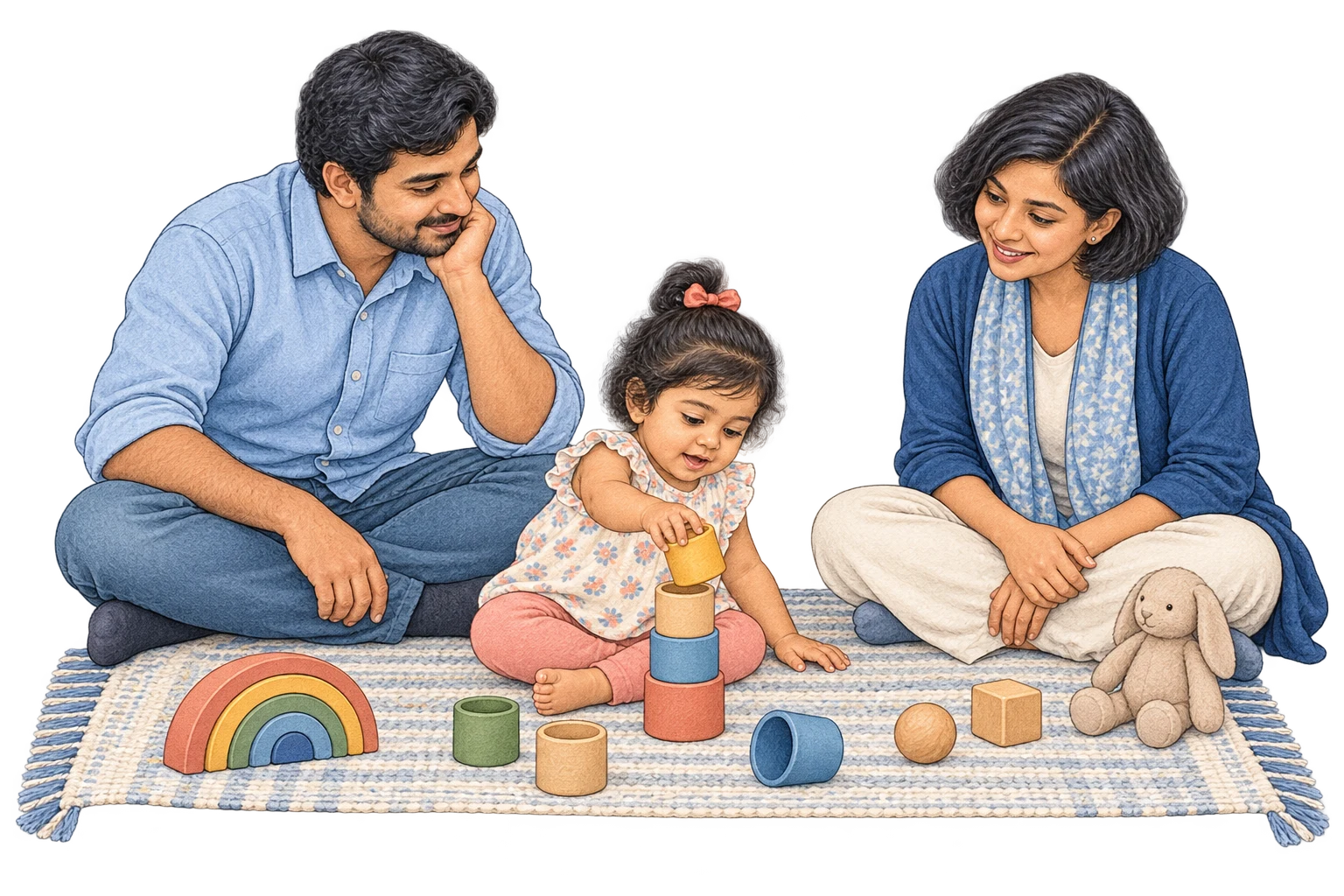
Elements: early intervention
Elements: early help for the earliest years
One-to-one early intervention for babies and toddlers when communication, movement, play, or routines are not tracking as expected. No diagnosis is needed to begin.
Consultation and assessment fees are explained before booking.
Is early help relevant now?
If you notice a difference in communication, movement, play, response, or everyday routines, you can ask now. No diagnosis is required.
A one-to-one plan follows communication, movement, play, and everyday routines, with guidance on what parents can watch and practise.
- Current format
- One-to-one support or a small coordinated plan across the right specialists.
- First step
- Describe what you notice; meet the right specialist if an assessment would help.
- Cost to expect
- Consultation ₹1,000; sessions from ₹900; detailed evaluation from ₹2,000.
Elements is currently delivered one-to-one or through a small coordinated plan. It is not an active group programme.
Inside early intervention
One child, one clinician, and a parent close by.
Elements is delivered one-to-one, not as a live group. Here is how a session is shaped and where parents take part.
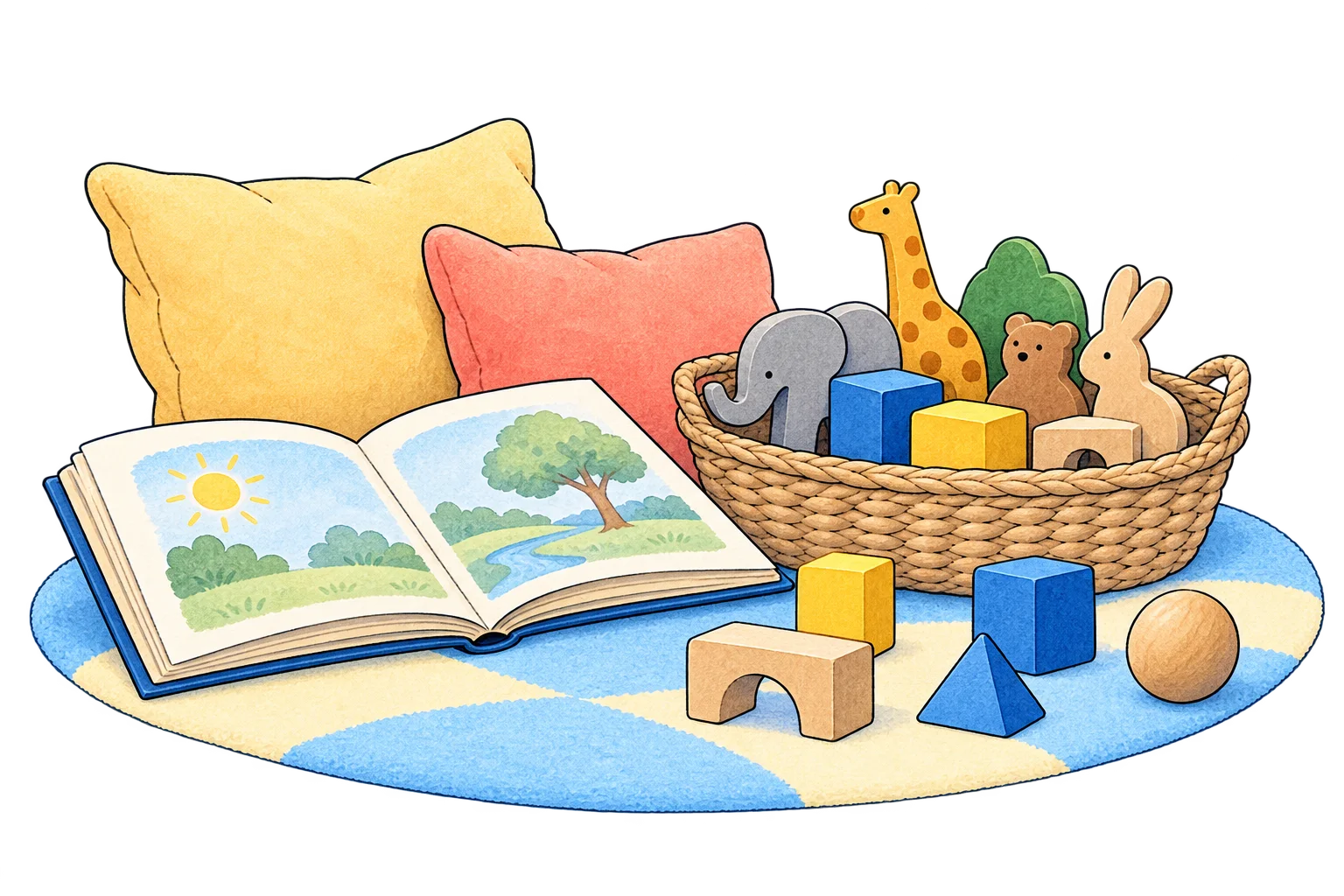
Illustration. The formatOne-to-one, around your child’s level
A young child works with the right specialist, one-to-one. Where more than one area needs help, a small coordinated plan brings speech, movement, and daily skills together.

Illustration. The goalCarefully aimed play, not drills
For the very young, therapy is play with a purpose: a target chosen for communication, movement, or daily routines, then worked into the games your child already enjoys.
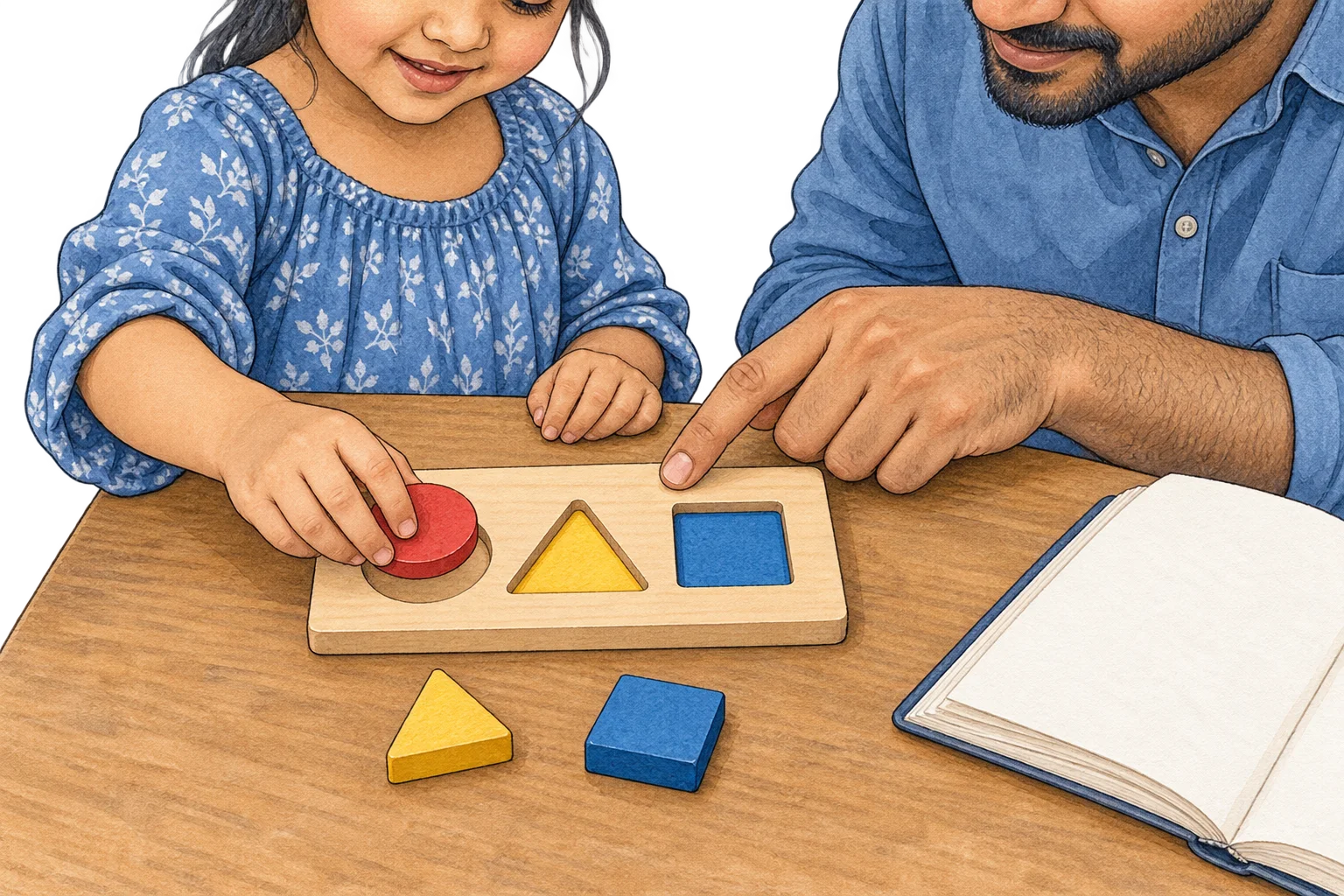
Illustration · Practising an everyday skill at home. At homeA parent-participation moment
Parents are shown what to watch for and one small practice to try in everyday routines, because the person a young child learns from most is you.
Why the earliest years matter
If you are noticing a difference in how your child communicates, moves, plays, or manages everyday routines, it is reasonable to ask for guidance. An early conversation can help you understand what to watch and whether support is appropriate. It is not a reason to panic, and there is no single deadline for asking.
After twelve years, we can also say this: families rarely regret asking early.
- Notice
Tell us what you see in play and routines.
- Understand
Meet the right specialist for consultation or assessment.
- Support
Make a one-to-one plan only if it would help.
What Elements includes
Elements now offers one-to-one early support, with specialists coordinated when a young child needs help in more than one area.
Who Elements is for
Usually for babies and toddlers up to around three whose development is uneven, with or without a diagnosis.
“Am I overreacting?”
Asking early is reasonable. An assessment can clarify whether your child needs help or simply needs watching.
What you’ll learn as a parent
You should leave knowing what to watch for and how to support your child in ordinary routines.
Questions parents ask
Is my baby too young for therapy?
For the very young, therapy is carefully aimed play, with no tables and no drills. If an assessment says help is needed, “too young” isn’t the question; “what kind” is.
Do we need a referral or diagnosis first?
No. Book an assessment directly. If your child later needs a specialist, we’ll guide you.
The paediatrician said wait and see.
That’s reasonable for some children. If you’re the one who can’t stop wondering, an assessment settles it.
How much does it cost?
Consultations are ₹1,000; sessions start at ₹900; a detailed evaluation starts at ₹2,000. See our Fees page.
My child is four. Too late for Elements?
Not too late at all, but at four, our speech, occupational and learning pages fit better. The age differs; the welcome doesn’t.
The early years don’t pause while you decide
One phone call is the whole first step, and the first conversation is free. Call +91 70225 30530.
Consultation and assessment fees are explained before booking.