
Occupational therapy
Occupational therapy for children
Occupational therapy helps when writing, dressing, sitting, moving, or sensory demands make an ordinary day harder.
Consultation and assessment fees are explained before booking.
Could occupational therapy fit this day?
It may fit when ordinary tasks repeatedly take more effort than they should: dressing, writing, sitting, moving, or coping with sensation.
Homework taking less time, dressing with more independence, or a calmer report from school. We review these practical changes about every four months.
- Where it runs
- Occupational therapy is available at both centres.
- First step
- We listen, assess the skills underneath the struggle, and set practical goals.
- Cost and place
- Both centres. Sessions start at ₹900; a detailed evaluation is quoted first.
Inside the session
How an everyday task becomes a skill to practise.
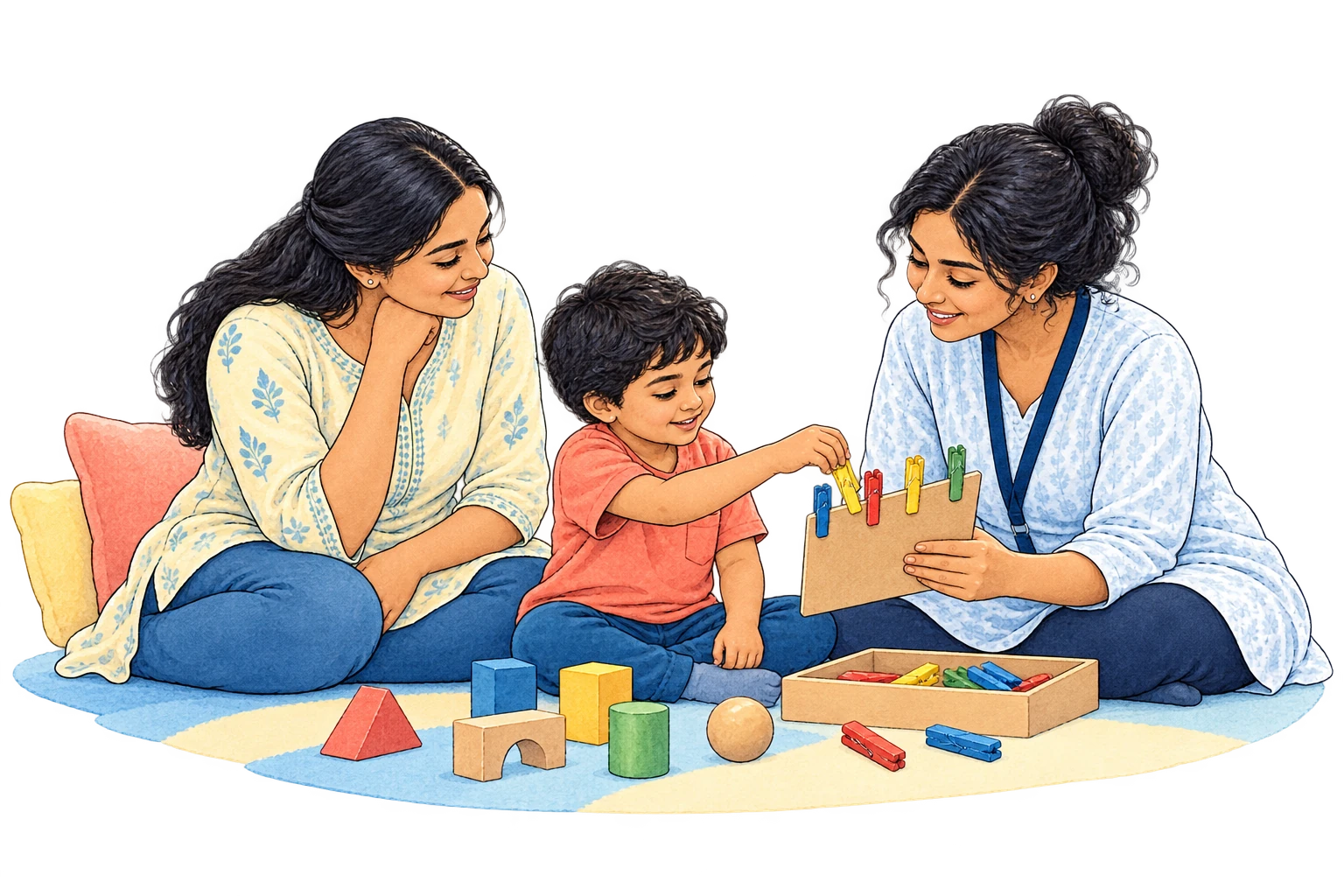
It can look like play, and the play has a purpose. Here is what gets chosen, why, and what a parent can carry into the week.
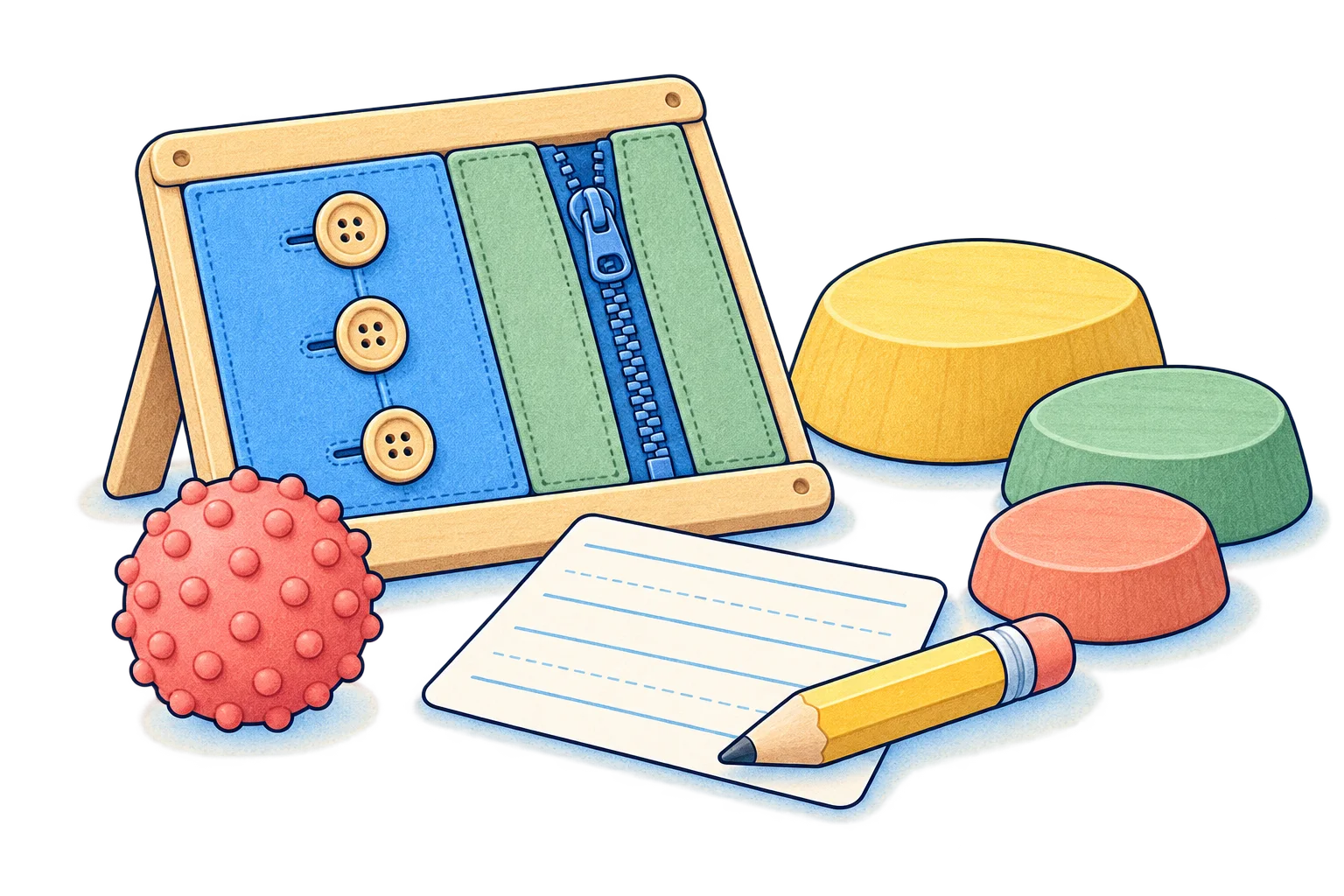
Illustration. The taskA task your child needs every day
The therapist starts from something real: pulling on a jumper, holding a pencil, or opening a lunchbox. The task your child finds hard is where the work begins.
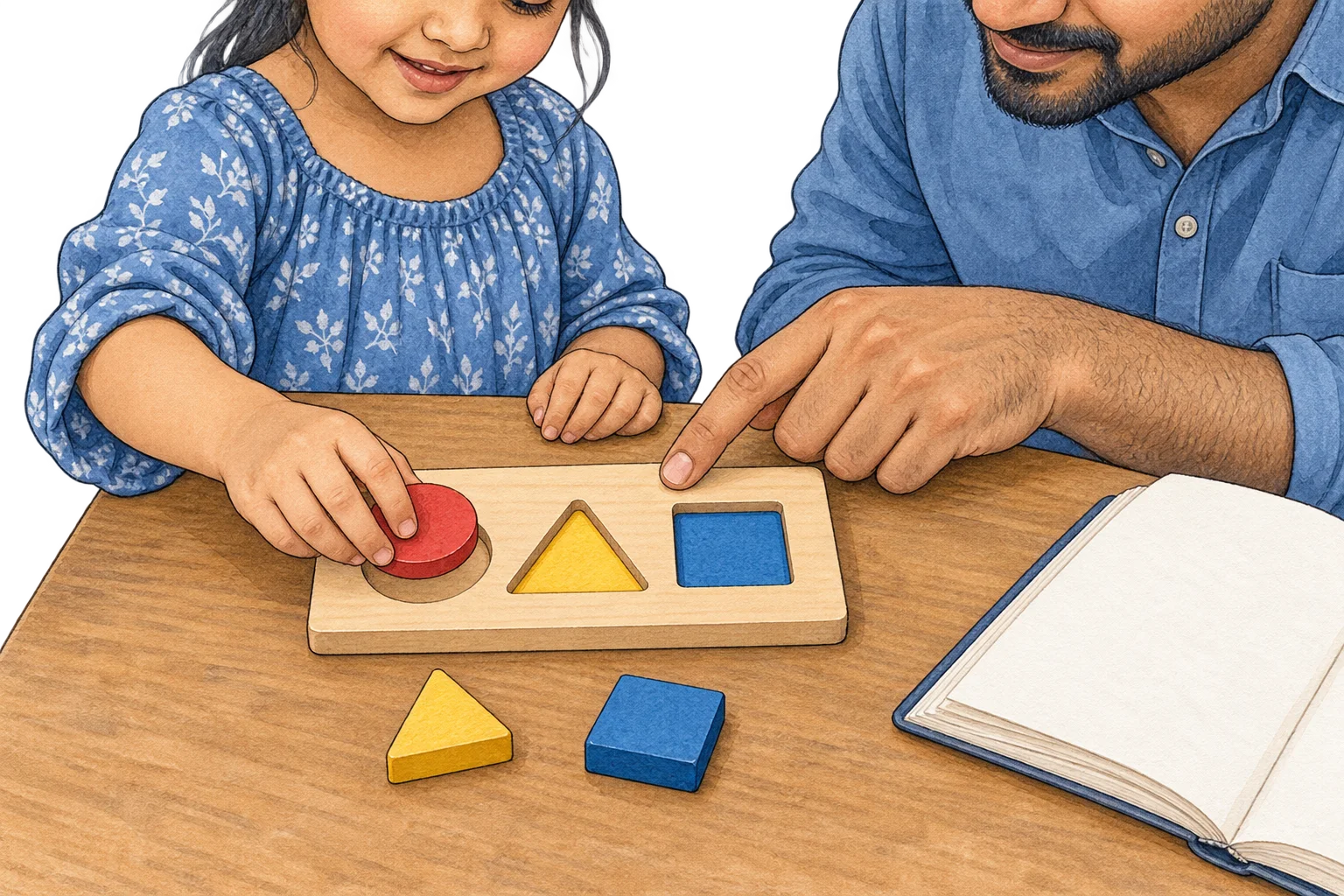
Illustration · Practising an everyday skill at home. The skill underneathThe smaller skill the task depends on
Under the task sits a smaller skill: hand strength, grip, shoulder stability, or planning a sequence of movements. The activity is chosen for that skill, not picked at random.

Illustration. At homeOne routine to try between visits
We explain what was worked on and one practical step to fold into a routine you already have, because small daily repetitions are where the skill settles.
What “occupation” means for a child
An adult’s occupation is their job. A child’s is their day.
Occupational therapy looks at why the ordinary parts of that day are hard: the pencil that won’t stay in the hand, the chair that won’t stay under the child, the birthday party that’s too loud. Then it builds the skills to make them easier. Most children here don’t know they’re in therapy. They’re playing, while an occupational therapist works on the exact skill holding them back.
The everyday skills we work on
The scope here is deliberately broad. This is one of our deepest services, and it’s more than “handwriting help”.
- Handwriting and fine motor skills.The painful pencil grip, letters that take forever, buttons and zips that end in tears.
- Sitting still and staying with a task.The child who wriggles off the chair, touches everything, finishes nothing.
- Sensory processing: overwhelm and hunger.Some children feel everything too much: labels, haircuts, loud rooms. Others crash, spin, and can’t settle until they’ve bumped the world hard enough. Both are real.
3 more topics to explore

What a session looks like
A qualified occupational therapist chooses play activities for a practical skill, then shows you small ways to practise at home.
Occupational therapy, and what it isn’t
This work supports daily tasks such as writing, dressing, sitting, and managing sensory demands; we will say when another discipline fits better.
How we’ll know it’s working
We review about every four months and look for changes in daily life, such as easier dressing, school, or homework.
Questions parents ask
“Couldn’t he do it if he tried harder?”
Almost never. Children don’t choose to struggle with a pencil or a noisy room. If they could succeed by trying, they would. What looks like laziness is usually a skill gap or a sensory problem, fixable and no one’s fault.
Do you work with the school?
If school is part of the struggle, tell us. We’ll help you put the conversation with the teacher together. Formal school liaison and coordination is arranged separately, with your consent.
How much does it cost?
Sessions start at ₹900, on our Fees page. A detailed occupational therapy evaluation is a separate, higher assessment. We’ll tell you its cost before you book it.
My child is two. Is OT for babies too?
For under-threes, this work usually sits under early intervention, and Elements is the better place to start.
If this felt familiar, that’s reason enough to talk
Tell us what your child’s ordinary day looks like; the first conversation is free. We’ll tell you whether occupational therapy is the right fit. Call +91 70225 30530.
Consultation and assessment fees are explained before booking.